Agency Is What You Need Now

I wrote recently about how AI will take your job, and the economic reality staring us in the face. But here’s the flip side that keeps me up at night:
In a world where AI makes coding easier, the only thing that will separate builders from talkers is agency.
Not intelligence. Not credentials. Not even technical skill.
Agency.
The ability to see what needs doing and just do it. To act without permission. To ship without perfect conditions. To get stuff done when everyone else is still planning.
What Agency Actually Means
Let me be clear about what I mean by agency, because the word gets thrown around carelessly.
Agency is the capacity to act independently and make choices that produce outcomes.
It’s not just autonomy or independence. It’s not “having a bias for action” or any other corporate buzzword. Agency is the muscle that converts intention into reality. It’s what Henry Ford demonstrated when he said:
You can’t build a reputation on what you’re going to do.
And what Robert Greene describes in The 48 Laws of Power as the Law of Boldness:
The bolder the lie, the better. Hesitation creates gaps, boldness obliterates them.
Agency is doing, not describing. Building, not planning. Shipping, not announcing.
Why Agency Matters More Now Than Ever
Here’s the uncomfortable truth: AI is democratizing intelligence and skill at a pace we’ve never seen before.
As I laid out in my previous piece, AI-assisted coding tools like Warp can already write mediocre code better and faster than junior engineers. They can explain complex systems, suggest architectural approaches, and generate solutions across multiple domains.
Intelligence, in the traditional sense, is becoming a commodity.
But you know what AI can’t do? It can’t decide what to build. It can’t commit to finishing something when it gets hard. It can’t ship version 1.0 when it’s “good enough” instead of perfect. It can’t stomach the discomfort of putting your work into the world.
That’s all agency. And it’s the one thing that can’t be automated.
Paul Graham captures this perfectly:
The way to get startup ideas is not to try to think of startup ideas. It’s to look for problems, preferably problems you have yourself.
But I’d go further: the way to succeed in the AI age isn’t to have the best ideas or even the best skills. It’s to actually build the thing while everyone else is still thinking about it.
Execution Over Intelligence
I’m not the most intelligent software engineer out there. Not even close.
There are engineers who understand computer science theory better. Who can whiteboard algorithms faster. Who know more languages, more frameworks, more architectural patterns.
But here’s what I do have: I ship stuff.
Not because I’m brilliant. Because I act.
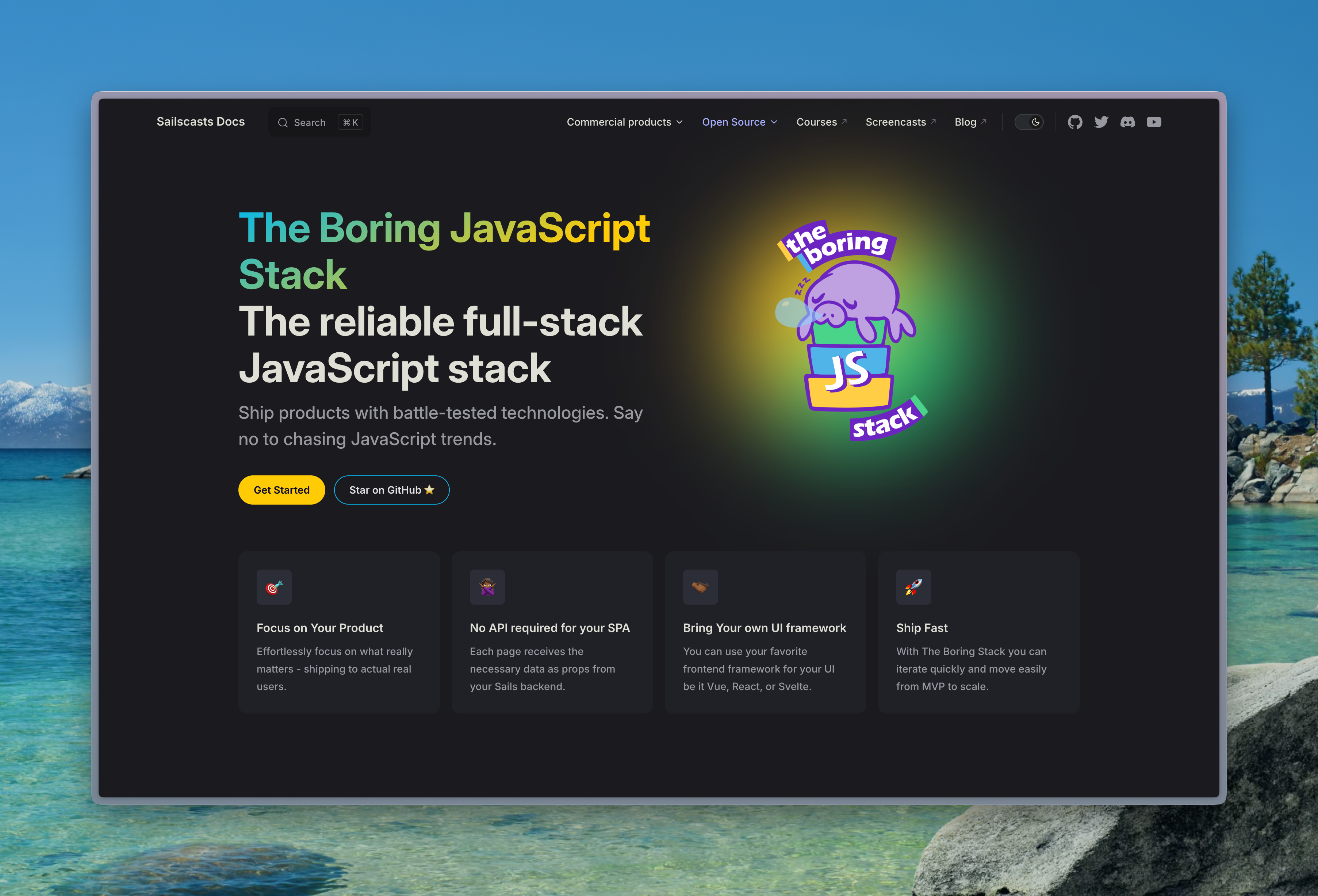
- When I needed a better JavaScript stack for building products, I didn’t complain about the complexity of modern web development—I built The Boring JavaScript Stack with Mellow and Ascent templates.
-
When Sails.js needed better tooling, I didn’t wait for someone smarter—I shipped Sails Language Server and the official Sails VS Code extension.
-
When developers needed to learn fullstack JavaScript, I created Sailscasts, taught courses, wrote documentation, and built a community.
-
When African engineering excellence wasn’t being covered by mainstream media, I launched The African Engineer to amplify their voices.
-
When I needed to get invoices out, I built Hagfish instead of wrestling with clunky tools.
None of these required genius. They required showing up and doing the work.
DHH nails this in his writing about building Basecamp:
Make something. Make something real. Make something that works.
That’s agency. Not talking about it. Not planning it to perfection. Making it.
AI As a Force Multiplier
Here’s where it gets interesting: tools like Warp don’t replace agency—they multiply it.
When I use Warp’s AI-powered terminal, I’m not outsourcing my thinking. I’m accelerating my execution. I can:
- Debug faster because Warp helps me trace issues across complex codebases
- Ship more because AI handles the boilerplate I’d waste time on
- Iterate quicker because the feedback loop is tighter
- Build more ambitious projects because my cognitive load is lower
The agency is mine. The velocity is enhanced.
And this is the pattern every high-agency person will follow: use AI as a force multiplier, not a replacement for judgment.
As I wrote in my AI will take your job piece:
The engineers who will succeed aren’t those who ignore AI, but those who wield it effectively to 10x their output.
That’s the agency play. Not competing with AI. Leveraging it to do what only you can decide to do.
The Pattern of High-Agency People
I’ve studied people who get stuff done. People like Taylor Otwell, DHH, Jason Fried, Caleb Porzio, Mike McNeil. My role models.
They all share the same characteristics:
1. They Act Before They’re Ready
High-agency people don’t wait for perfect conditions. They don’t wait until they’ve mastered every detail.
When I launched guppy, it wasn’t perfect. When I rolled out The Boring Stack templates, they were version 0.1. When I took over as lead maintainer of Sails.js, I didn’t have all the answers.
I acted anyway.
Henry Ford put it simply:
Chop your own wood, and it will warm you twice.
Waiting for perfect conditions is just procrastination with a respectable name.
2. They Build in Public, Ship in Private
Notice I didn’t say “announce in public.” High-agency people don’t waste energy on announcements.
As I wrote in Shut Up and Act:
You’re killing your dreams by talking about them. Your brain mistakes the talking for doing.
Instead, they document their shipping. Not “I’m going to build X.” But “I built X. Here’s the link.”
The work speaks. The agency is evident.
3. They Solve Their Own Problems First
Every project I’ve shipped started as a solution to my own problem:
- The Boring Stack? I was tired of complexity.
- guppy? I needed better debugging tools.
- Sailscasts? I wanted to learn Sails deeply.
- The African Engineer? I wanted to hear real stories from engineers like me.
Paul Graham calls this “scratching your own itch.” I call it high-agency problem-solving.
4. They Don’t Ask Permission
When Sails needed better documentation, I didn’t wait for someone to ask me to write it. I wrote guides.
When the community needed a place to gather, I opened the doors.
When African engineers needed representation, I started publishing.
Robert Greene’s principle applies:
Authority belongs to those who take responsibility when others don’t.
High-agency people don’t wait to be anointed. They anoint themselves through action.
Intelligence vs. Agency: Why Execution Wins
A man may be very learned and very useless. A man may be unlearned and very useful.
Here’s what most people miss.
intelligence without agency produces nothing.
You can be the smartest person in the room, understand the most elegant solution, see the perfect architecture—and still ship nothing if you can’t execute.
Meanwhile, someone with moderate intelligence but massive agency will:
- Ship the imperfect version
- Get user feedback
- Iterate based on reality
- Build something people actually use
This is why founders beat researchers. Why indie hackers beat corporate committees. Why builders beat talkers.
Henry Ford didn’t invent the automobile. He wasn’t the smartest engineer of his time. But he had the agency to mass-produce them at a price point that changed the world.
That’s the lesson. Execution beats intelligence every time.
How AI Actually Changes the Game
Now here’s where my previous article and this one converge into something important:
AI makes intelligence cheap, which makes agency expensive.
When everyone has access to tools that can write code, explain concepts, and solve problems, the bottleneck shifts from “can you figure it out” to “will you actually do it?”
This is both terrifying and liberating.
Terrifying because if you’re coasting on being “smart,” you’re about to get commoditized.
Liberating because if you’re willing to act, you’ve never had more leverage.
The combination of high agency + AI tools is devastating. You can ship faster, iterate quicker, build bigger, and impact more people than ever before.
But only if you actually ship.
What This Means For You
If you’re reading this and thinking, “I need to develop more agency,” here’s the truth: you can’t think your way into agency. You can only act your way into it.
Agency is a muscle. It gets stronger with use.
Start small:
Today: Take one small action you’ve been postponing. Not tomorrow. Today.
This week: Ship something imperfect. A blog post, a feature, a project, anything. Get it out.
This month: Build something you need. Don’t wait for permission. Don’t ask if it’s a good idea. Just build it.
This year: Look at your list of “someday” projects. Pick one. Ship it by the end of the year.
As I shared in my open-source journey:
Show up. Ship. Share. Serve. The rest will follow.
That’s not motivational fluff. That’s the actual playbook.
The Future Belongs to Builders
Here’s my final thought: we’re entering an era where AI will make most traditional skills commonplace.
Code generation? Commonplace.
Technical explanations? Commonplace.
Design patterns? Commonplace.
Problem-solving approaches? Commonplace.
But the ability to decide what to build, commit to finishing it, and shipping it to the world?
That remains rare. That remains valuable. That remains human.
Your competitive advantage in the AI age isn’t your intelligence—it’s your agency.
Not what you know. What you do. Not what you plan. What you ship. Not what you could build. What you actually built.
Robert Greene writes in The 48 Laws of Power:
Everyone admires the bold; no one honors the timid.
Like the frame in my home office says:
Do stuff. Talk about them. Do bigger stuff.
Henry Ford demonstrated:
You can’t build a reputation on what you’re going to do.
And Paul Graham teaches:
Make something people want.
These aren’t platitudes. They’re instructions.
Final Challenge
I’ll end where I started: agency is what you need now.
Not more courses. Not more frameworks. Not more planning.
More shipping. More building. More doing.
AI will handle the intelligence work. You handle the agency work.
And if you do, you’ll thrive in a world where everyone else is waiting for permission that’s never coming.
So go build something. Today. Not tomorrow. Today.
And when you’re done, build something else.
That’s agency. And it’s all that matters now.
Ship deliberately 🚀
What’s your take on agency in the age of AI? Let me know on X.