Dear African Builders, Subscriptions Might Kill Your SaaS
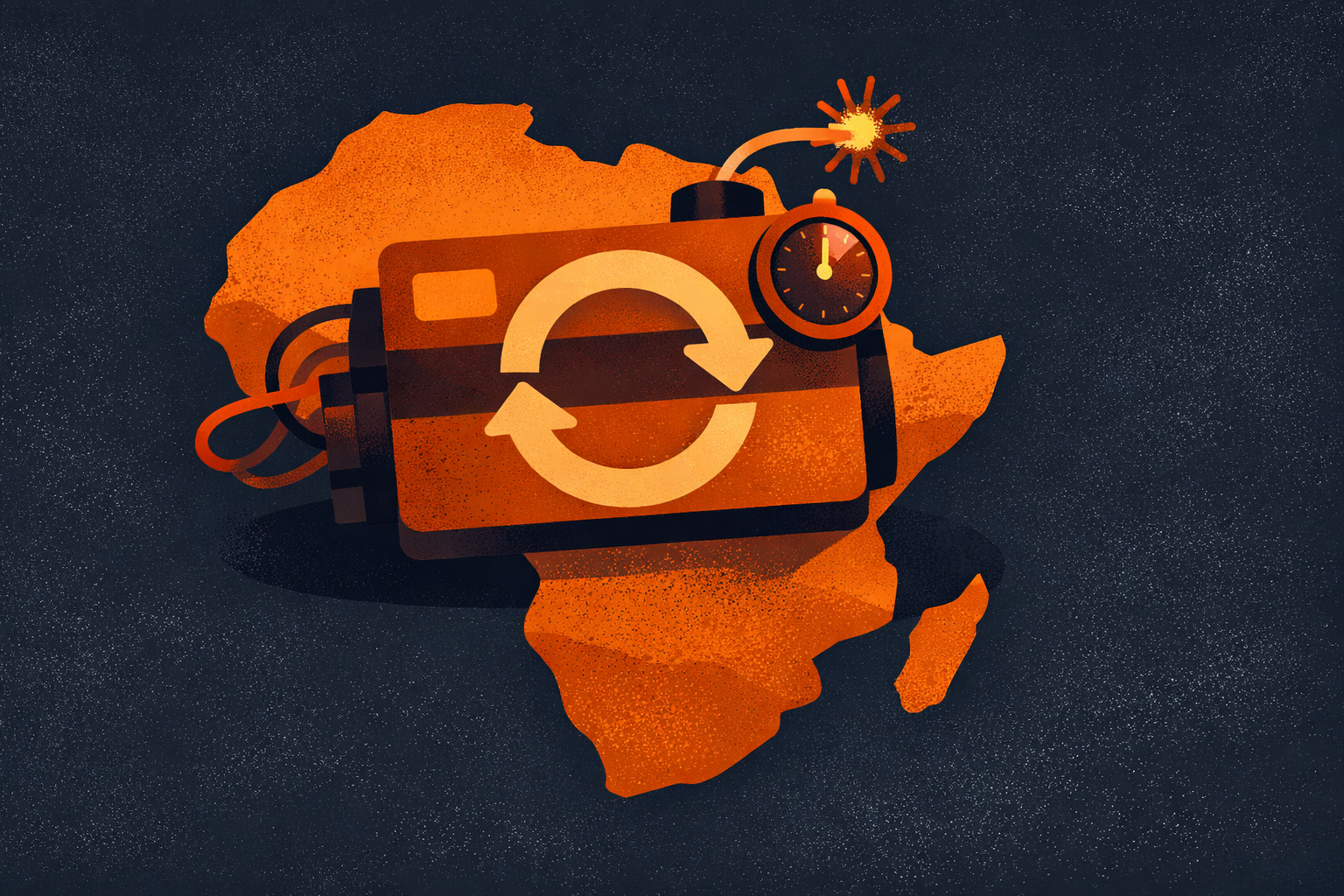
If the pain of what you are solving is less than the pain of your pricing model, your SaaS will fail.
I woke up to my first-ever chargeback request in my 5+ years of building products.
It felt weird. But after the initial sting wore off, I did some thinking.
This user probably didn’t see an issue of The African Engineer for February. In a culture where there’s a strong “what I ordered versus what I got” syndrome, of course they’d panic and think someone is taking advantage of them. A charge keeps showing up on their statement and they haven’t received anything new in a few weeks. What would you do?
Instead of feeling sorry for myself and blaming them for not just trusting me, I realized something bigger. There will always be a category of users in Nigeria who won’t feel comfortable subscribing monthly to anything, no matter how small the price is, but will still want the value.
That chargeback wasn’t a customer problem. It was a pricing model problem.
And if you’re building a SaaS product for Africans using the same subscription playbook you copied from Silicon Valley, you might be sitting on the same ticking time bomb.
The spending habits nobody talks about
Let’s start with something uncomfortable.
82% of all software installed on personal computers in Nigeria is unlicensed. Not because Nigerians are thieves. Because the pricing models of Western software companies are so disconnected from Nigerian spending reality that piracy becomes the rational choice.
Think about that. When over 8 out of 10 people in your market would rather find a cracked version than pay for your product, the problem isn’t morality. The problem is that your pricing doesn’t match how your customers relate to money.
Here’s how most Nigerians relate to money: we buy what we need, when we need it, in the amount we can afford right now.
We buy airtime in ₦100 bundles. We buy data in daily packs. We buy electricity tokens for the week, not the month. We pay for things when we can see exactly what we’re getting in exchange.
This isn’t a flaw. This is a deeply rational response to economic reality.
When your income is variable, when inflation is running at 31%, when the currency you earn in can lose 40% of its value against the dollar in a single year, you don’t lock yourself into recurring payments. You control your spending by making it transactional. You pay as you go.
And yet, African SaaS founders keep building subscription-first products as if their customers are Americans with autopay enabled on 8 different streaming services.
Let’s talk about America for a second
The average American spends between $90 and $118 every month on subscriptions. Netflix, Spotify, gym memberships, cloud storage, meal kits, Amazon Prime, the meditation app they used twice. They have an average of 8.2 active subscriptions. One in four Americans spends over $100 a month on streaming and subscriptions alone.
This works in America because the conditions support it. The average American GDP per capita is about $66,000 a year. Credit cards are everywhere. Payment infrastructure is rock solid.
Recurring billing just works. The money leaves your account and you barely notice.
Now look at Nigeria
The minimum wage is ₦70,000 a month. That’s roughly $43 to $50. The average monthly salary is about ₦339,000, roughly $220. Nigeria’s GDP per capita is somewhere between $807 and $1,200 depending on who you ask and which exchange rate you use.
An American spending $90 a month on subscriptions is spending about 0.16% of their monthly per-capita GDP. A Nigerian spending the same $90 would be spending 100% or more of their entire monthly per-capita GDP.
Even a $10/month SaaS tool, which feels like nothing in San Francisco, represents a dramatically higher share of Nigerian income.
And that $10 isn’t stable either. A tool that cost ₦3,800/month in 2020 costs ₦15,350/month today because the naira lost over 300% of its value against the dollar between 2020 and 2024.
Your customer’s salary didn’t 4x in the same period. But your USD-denominated subscription did.
The telcos figured this out decades ago
Here’s what’s funny. The most successful technology companies on the African continent already solved this pricing problem. We just haven’t been paying attention.
MTN Nigeria has 80.9 million subscribers. They made ₦3.36 trillion in revenue in 2024. And their average revenue per user? $0.86 per month. Less than a dollar.
They didn’t get there by selling monthly postpaid plans the way AT&T sells unlimited plans in America. They got there by building their entire business around how Africans actually spend money.
Pay-as-you-go airtime. Daily data bundles for as low as ₦50. Weekly packages. Top up when you have money, use what you bought, top up again when you can. No surprises on your statement. No recurring charge you forgot about. No chargeback because you didn’t see value this month.
MTN and Airtel didn’t try to “educate” Africans into adopting Western postpaid billing. They met their customers where they were. And they built empires doing it.
The lesson is right there. It’s been right there for over two decades. But SaaS founders keep ignoring it because the Y Combinator playbook says MRR is the only metric that matters.
The subscription problem is a churn problem
Let’s get specific about why subscriptions are particularly dangerous in African markets.
Involuntary churn from payment failures accounts for up to 50% of all customer churn globally. That’s the churn that happens not because a customer decided to leave, but because their payment simply failed. Card expired. Insufficient funds. Transaction declined.
Now layer on the African payment reality:
Only 1.6% of Nigerians have credit cards. The debit cards that exist? About 60% of them are inactive. Nigerian banks started restricting foreign currency transactions on naira cards in 2022. Network reliability issues cause transactions to fail or get delayed across the continent.
Even mobile money, which is the most promising payment rail in Africa, requires per-transaction authorization. There’s no “set it and forget it” recurring billing like there is with American credit cards.
So you build a subscription SaaS. Your Nigerian customer signs up. Month one, they pay. Month two, their card gets declined because the bank is restricting dollar transactions.
Month three, they have the money but the network drops during the payment attempt. Month four, they’ve forgotten about your product entirely because the last two charges failed silently.
You didn’t lose that customer because your product was bad. You lost them because your pricing model is fighting against the payment infrastructure of the continent.
And here’s the part that should really concern you: in a market where 57% of the population is unbanked, subscription billing excludes the majority of your potential customers before they even see your landing page.
The question you need to ask yourself
Before you default to $X/month pricing because that’s what every SaaS blog tells you to do, ask yourself this question:
Is the value I’m providing perceived as consistent enough for my customers to feel good about renewing every month?
Be honest. Not “is my product good?” That’s a different question. The question is whether your customer will feel, 30 days from now, that the money leaving their account was worth it.
Because in a market where every naira is accounted for, where spending is intentional and deliberate, where there’s a cultural expectation of clear value exchange, a subscription that doesn’t deliver obvious value every single billing cycle will feel like a drain. And drains get plugged.
That chargeback I got? It wasn’t malicious. It was a customer who didn’t see an issue for a few weeks and thought “why am I still being charged?” In a subscription model, even a brief gap in perceived value can trigger that response.
In America, people forget about subscriptions they don’t use. In Nigeria, people notice every single charge and evaluate whether it was worth it.
So what do you do instead?
Pricing engineering: meet your customers where they are
I’ve been thinking about this as a discipline. Not just “pricing” but pricing engineering: understanding the spending habits of your target audience and building your billing to fit them. Meeting them where they are instead of where you wish they were.
This is what MTN did. This is what the hawker selling airtime recharge cards on the street corner does. This is what every successful Nigerian business that serves the mass market has figured out.
And it’s what most African SaaS founders haven’t done.
So let me lay out the alternatives. Because “subscription or nothing” is a false choice, and there are pricing models that actually work with African spending patterns instead of against them.
The pricing playbook
Not every product should be priced the same way. The right model depends on what you’re selling, how often your customer needs it, and how they perceive the value. Here’s a framework.
1. One-time payment
Best for: Digital products, courses, templates, tools with a clear deliverable, content you consume once or within a window.
How it works: Customer pays once, gets the thing. No recurring billing. No churn. No failed payments next month.
Why it works in Africa: It mirrors how Africans already buy. You pay for what you get. There’s a clear transaction: money leaves, value arrives. No ambiguity, no surprises.
Real example: This is exactly what I just built for The African Engineer. Instead of forcing every reader into a monthly subscription, I added a “pay to read for a month” option. Pay a one-time fee, unlock an issue for a month. No recurring charge, no subscription to manage, no chargeback because you forgot. You pay once, you get the value.
Some readers want the subscription. Great. But for the ones who don’t, who just want to read that one issue about Kuda’s Nerve or whatever topic caught their eye, they now have a path that matches how they prefer to spend.
AppSumo has built an entire platform around this model. Lifetime deals where you pay once for permanent access. Companies like Seodity made $270,000 in a single month selling lifetime deals. Pictory went from 50 to 6,000 users in two months. The demand for “pay once, own it” is massive and real.
2. Credits / Pay-as-you-go
Best for: API products, AI tools, communication platforms, anything where usage varies.
How it works: Customer buys credits upfront. Uses them as needed. Buys more when they run out.
Why it works in Africa: This is literally the airtime model. Buy ₦500 of credits. Use them. Buy more when you’re done. The customer is always in control of their spending. No surprises.
This is the fastest-growing pricing trend in SaaS globally. 79 companies in the PricingSaaS 500 Index now offer credit-based pricing, up from 35 at the end of 2024. That’s a 126% increase in one year. Companies using usage-based pricing see 29.9% year-over-year revenue growth versus the SaaS average of 21.7%.
Twilio charges per API call. OpenAI charges per token. Mailchimp lets you buy email credits. ZeptoMail sells you 10,000 email credits for about ₦1,200 that expire in six months. No monthly subscription. You buy the credits, you send emails, you buy more when you run out. That’s it.
These aren’t small companies making experimental choices. These are industry leaders who figured out that customers want to pay for what they use.
If the telcos can make billions at $0.86 ARPU by letting people pay as they go, you can too.
3. Percentage on top / Fixed fee per transaction
Best for: Marketplaces, payment platforms, fintech, any product that facilitates transactions or creates measurable value.
How it works: Instead of charging a flat monthly fee, you take a small percentage or a fixed fee every time your customer uses the product to do something valuable. The customer only pays when they get value. You only earn when they earn.
Why it works in Africa: This is the most natural pricing model in Nigerian commerce. The POS operator at the junction charges you ₦100 per withdrawal. The dispatch rider charges per delivery. The agent at the mobile money kiosk takes a percentage. The market woman selling on credit adds a small markup on the price. Every layer of Nigerian commerce already works this way.
Paystack charges 1.5% per local transaction, capped at ₦2,000. Flutterwave charges 1.4%, also capped. These are two of the most successful African tech companies ever built, and neither of them charges a monthly subscription to their merchants.
They take a cut when the merchant makes money. Merchant makes nothing, they pay nothing.
This model aligns your incentives with your customer’s incentives. You succeed when they succeed. That’s not just good pricing. That’s trust-building in a market where trust around money is hard-won.
If your product helps your customer make money or save money, take a percentage of the value you create. Don’t charge them before they’ve seen the value.
4. PPP-based subscription (if you must do subscriptions)
Best for: SaaS tools with continuous value delivery, platforms where the user needs ongoing access.
How it works: You still charge monthly or annually, but you adjust your price based on where the customer is located. A customer in Lagos doesn’t pay the same as a customer in San Francisco.
Why it works: It acknowledges economic reality. I wrote about this in depth in Build Globally, Price Locally.
According to World Bank data, Nigerians can afford to pay roughly 88% less than what you charge your American counterpart. Nigeria’s GDP per capita is roughly 55x to 83x lower than America’s. Charging the same price in both markets isn’t “fair pricing,” it’s economic illiteracy.
Let me put it plainly. If you’re charging $20/month for your SaaS in the US, the PPP-equivalent price for a Nigerian user is about $2.40/month.
That $20 feels like pocket change to a developer in Austin. To a developer in Lagos, it feels like a decision between your tool and lunch for two days. Same product, same value, completely different weight on the wallet.
If you charge both users the same price, you’re not being fair. You’re just being lazy with your pricing.
Spotify gets this. Their premium plan costs ₦1,600/month in Nigeria versus $11.99/month in the US. That’s roughly 87% cheaper. Netflix offers mobile-only plans in African markets at dramatically lower price points.
Zoho prices their products in local currencies with PPP-adjusted rates, and their East Africa Country Manager called out the fact that “most multinational vendors that have come to Africa have yet to offer anything in local currency.”
This is what I do with Hagfish, a platform for creators to send and schedule professional invoices, track business expenses, and manage clients. Even though the core audience is creators who are making money, they still need pricing that matches their economic reality. So Hagfish offers PPP-based pricing. A creator in Lagos doesn’t pay the same as a creator in London.
Tools like Gumroad offer built-in PPP discounts ranging from 20% to 60% based on World Bank data. ParityDeals and Lemon Squeezy provide automatic PPP discount tooling for indie developers and SaaS companies.
If you must do subscriptions, PPP-based pricing isn’t optional. It’s the bare minimum.
5. Pay-as-you-earn / Milestone-based
Best for: Education platforms, consulting, services with measurable outcomes.
How it works: Customer pays as they achieve milestones or consume value. Payment is tied directly to outcomes rather than time.
Why it works in Africa: It removes the risk of paying for something you haven’t benefited from yet. The value exchange is always visible and tangible. You don’t pay hoping for value. You pay because value already arrived.
Think about how freelance platforms work. The platform doesn’t charge you a monthly fee to be a freelancer on it. The platform makes money when your client pays you. You earn, they earn. Nobody pays until value is delivered.
Now imagine applying that same logic to your SaaS: an education platform that charges when the student lands a job. A sales tool that takes a cut when you close a deal. A recruiting platform that bills when the candidate gets hired.
The customer never feels like they’re paying for nothing because payment only happens after the outcome.
Quick reference
| Product Type | Recommended Model | Why |
|---|---|---|
| Content / Digital products | One-time payment | Clear value exchange, no churn |
| API / AI / Communication tools | Credits / Pay-as-you-go | Mirrors airtime model, usage-based |
| Marketplaces / Fintech | Percentage or fixed fee on top | Aligns with how Nigerian commerce works |
| SaaS platforms (ongoing use) | PPP-based subscription | Adjusts for purchasing power |
| Education / Training | Pay-as-you-earn | Tied to outcomes |
| Developer tools | Credits + one-time tiers | Flexible, low barrier to entry |
Keep your costs low
There’s another angle to this that’s worth mentioning.
If you want to price your product at a level that’s fair and affordable for your market, you need to keep your own costs low enough to make that viable.
You can’t charge Silicon Valley prices because you need to cover Silicon Valley costs, and then wonder why your African customers don’t convert.
This is where building lean matters. The leaner your operation, the more flexibility you have in pricing. The more flexibility you have in pricing, the better you can meet your customers where they are.
If your infrastructure costs $5,000/month, you need a certain number of customers at a certain price point just to break even. But if you’ve engineered your stack to run lean, maybe that number is $500/month. Now you can afford to charge ₦2,000 instead of ₦20,000 and still build a sustainable business.
Pricing engineering starts with cost engineering. You can’t offer African-friendly pricing on a Silicon Valley cost structure.
Learn from your own spending habits
Here’s an exercise. Look at your own phone right now.
How many subscriptions do you pay for? How many of those did you sign up for happily versus grudgingly? How many have you canceled and re-subscribed to? How many do you forget about until the charge hits and you feel a small pang of regret?
Now look at how you buy airtime. How you buy data. How you pay for electricity. How you pay for ride-hailing. Transaction by transaction. Clear value for clear money.
Which model feels more natural to you?
If you’re an African builder and you’re being honest with yourself, the transactional model probably feels more natural. Not because subscriptions are bad in the abstract, but because your own relationship to money is shaped by the same economic realities your customers live in.
It’s okay to be influenced by Silicon Valley. But the spending habits and cultural differences between markets are massive. You already know this. You live it. The way you hesitate before renewing a subscription but don’t think twice about buying a data bundle is all the market research you need.
Learn from the telcos. Learn from your own spending habits. Learn from your own relationship to paid software. Then build your pricing to match reality, not aspiration.
This isn’t theory for me
That chargeback I opened with? It pushed me to act. I didn’t just write about pricing engineering. I shipped it.
The African Engineer now has a one-time “pay to read for a month” option sitting right alongside the subscription. Hagfish has PPP-based pricing baked in. I’m not guessing whether these models work. I’m testing them with real users and real money.
And here’s what I’ve learned so far: pricing engineering is not about picking one model and forcing everyone into it. It’s about understanding that your audience has different spending comfort zones and building options that meet each of them where they are.
Some readers will happily subscribe. Others want to pay once for the issue they care about and move on. Both are valid. Both are paying customers. The only difference is whether your billing lets them be.
The bottom line
If you’re an African builder targeting African customers, stop defaulting to the subscription model just because that’s what the SaaS playbooks tell you to do.
Those playbooks were written for markets with stable currencies, universal banking, reliable payment infrastructure, and customers who treat subscriptions as background noise. That’s not your market.
Your market was raised on prepaid. Your market evaluates every charge and asks “was this worth it?” Your market already understands credits, percentages on top, and paying for what you use because that’s how every layer of Nigerian commerce already works.
The most successful technology companies in Africa already know this. They’ve been building around it for over 20 years. It’s time the SaaS builders caught up.
So before you write your next pricing page, do the work. Study how your customers actually spend. Look at your own spending habits. Consider one-time payments. Consider credits. Consider taking a percentage or a fixed fee. Consider PPP-adjusted pricing. Consider pay-as-you-go.
And ask yourself: am I building my pricing for my customers, or am I building it for the investors I saw on X?
Your customers will tell you the answer. Sometimes with a chargeback.